What US CMOs Believe and What Audiences Actually Feel
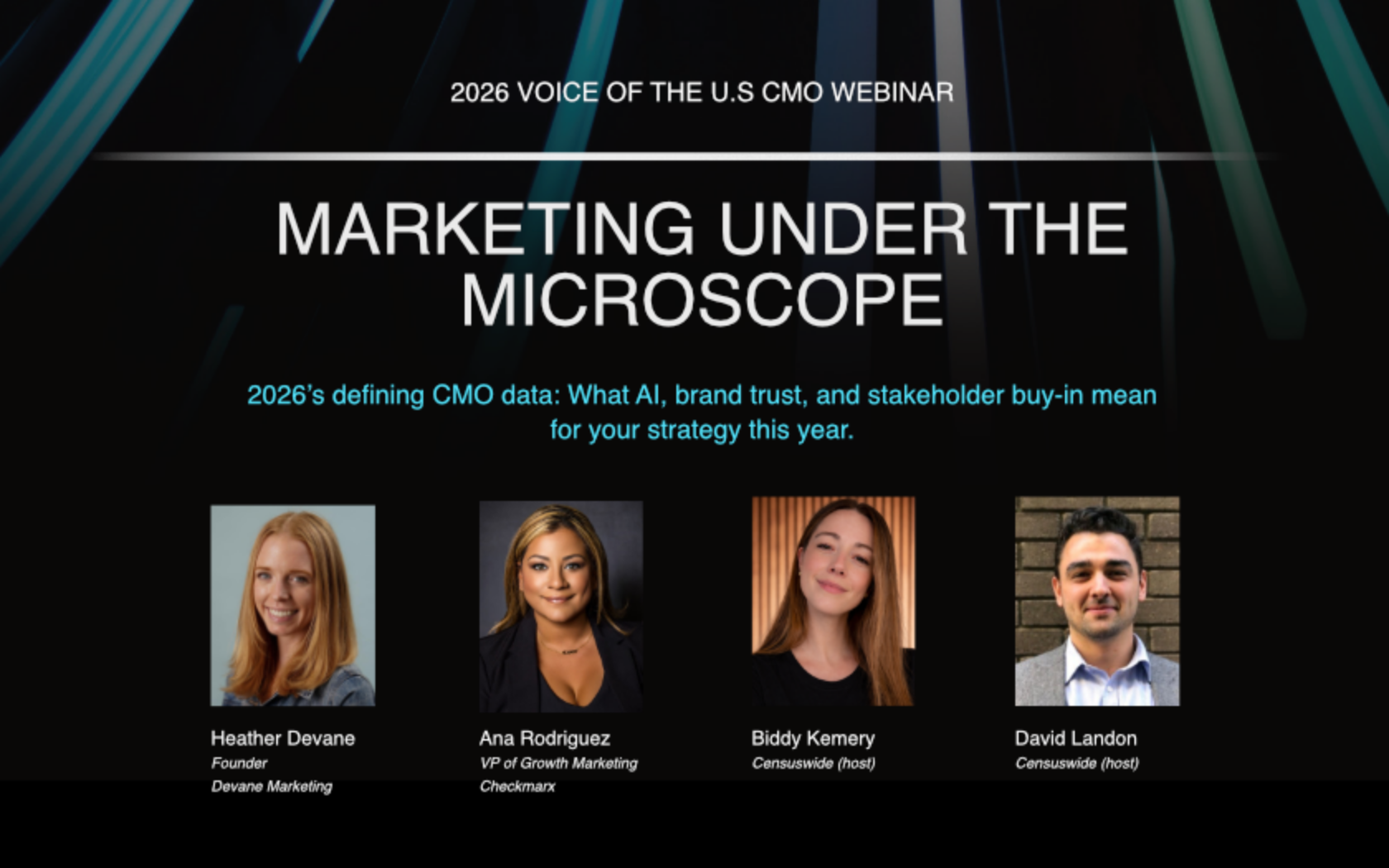
Takeaways from our Voice of the US CMO webinar, with Ana Rodriguez, VP of Growth Marketing at Checkmarx and Heather Devane, Founder of Devane Marketing
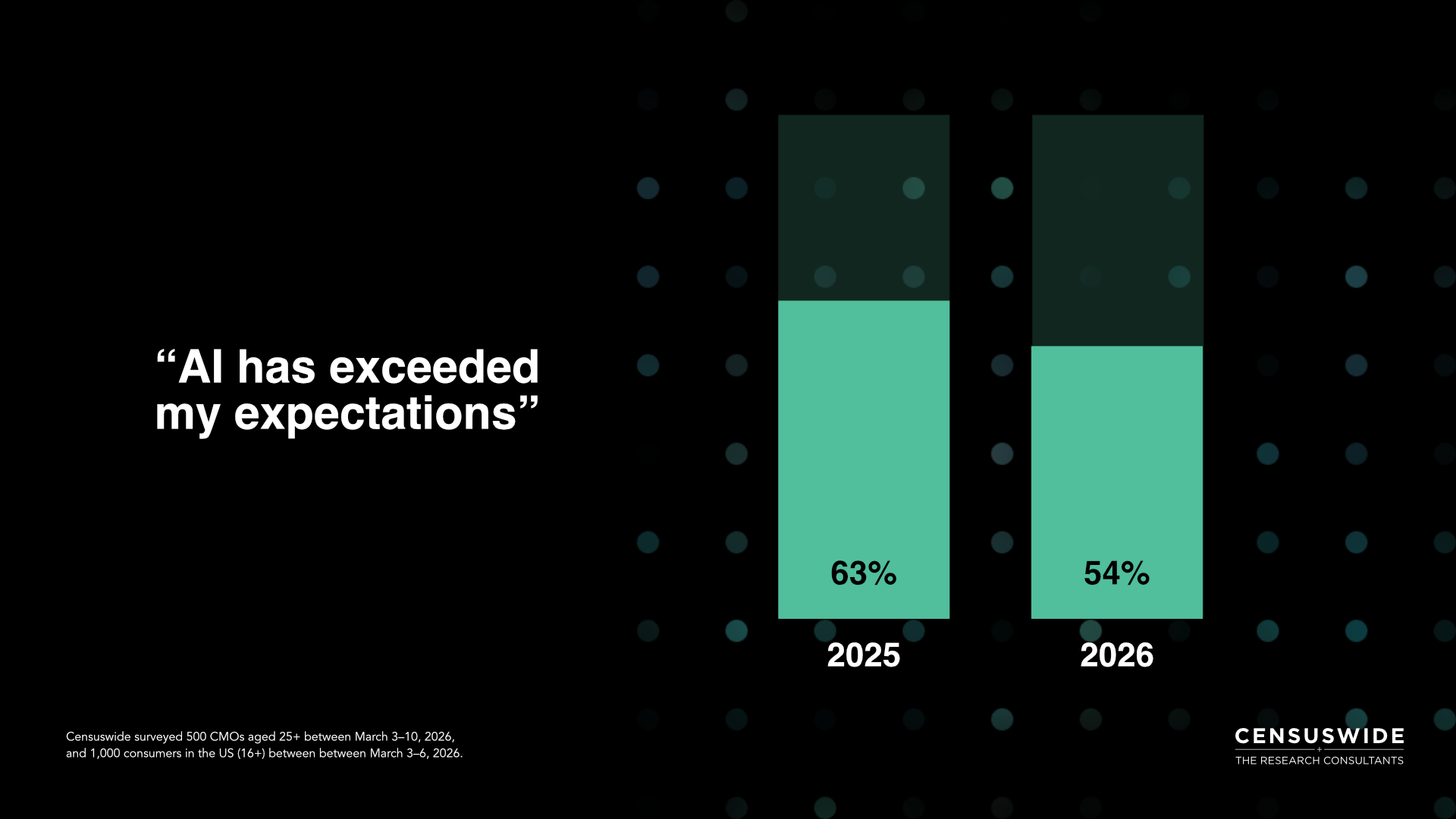
Two numbers from our latest Voice of the CMO report sum up the year in marketing. Some 63% of CMOs say AI has improved the quality of their content, while only 34% of consumers say they’re comfortable with brands using generative AI for social content.
That’s one of the clearest differences between CMO and consumer sentiment in the second edition of the report, which surveyed 500 CMOs and 1,000 consumers. On September 16, we asked two marketing leaders to help us work out what’s behind it. Here’s what they said.
Good enough for the CMO, not for the customer
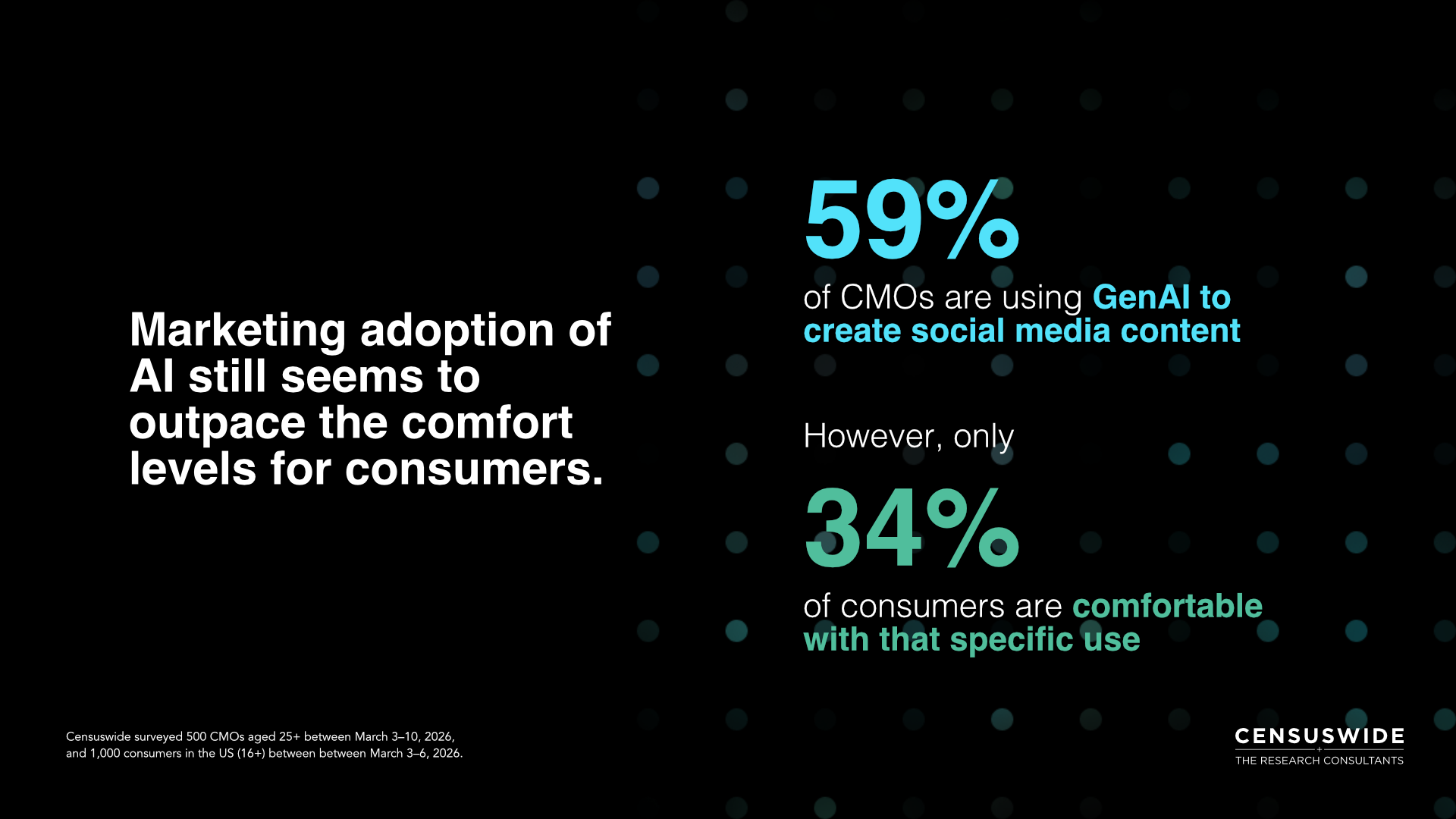
While 59% of CMOs are using GenAI to create social media content, only 34% of consumers are comfortable with them doing so. If you’re a consumer scrolling past the same recycled structure and tropes for the tenth time, it’s understandable why the appetite for AI content is not there.
“AI-generated content is flattening where content is going,” Devane says, and CMOs may be feeling that too. If everyone is generating content with similar tools, it’s hard to move the needle. The report backs this up: the share of CMOs embracing AI “with caution” grew year over year.
Rodriguez sees it up close. She says she can often tell when a colleague has built a presentation with an AI tool, because it lacks a certain level of detail, and it can feel a little dull. Her bigger worry is what gets lost. Creativity was the fun part of the job, and it’s a muscle that weakens if teams don’t use it.
Why marketers are quietly pulling back
You might expect CMOs who are this positive about AI to be using it more and more. They aren’t. Usage fell year over year across nearly every AI use case, even though satisfaction stayed high.
Rodriguez reads that as marketers finding their balance, and she has lived a version of it. When her company rolled AI out to everyone, costs jumped and they had to rein it in. There’s a cultural side too. People are uneasy about how much these tools absorb about their work and their lives, and about how quickly everyone has come to depend on them.
For Devane, a bigger driver is brand risk and pride in the work. She recalls a company that once considered an AI-generated podcast. AI audio is easy to spot, she says, and if the audience found out, the company would have lost credibility. The idea never made it out of the brief. Marketers want to believe in what they publish, and they want to know where to draw the line.
That line is drawn in different places depending on the industry. In consumer brands, the punishment is public. Devane points to a McDonald’s holiday ad in the Netherlands that was reportedly torn apart online until the brand pulled it and switched off comments. In cybersecurity and other regulated B2B categories, the damage is quieter and just as serious. A wrong statistic or misstated regulation won’t necessarily prompt a complaint, but customers will lose trust. “We work in the trust industry,” says Rodriguez, so her team uses AI for things like presentations but is careful about what it publishes.
Redesign, not replacement
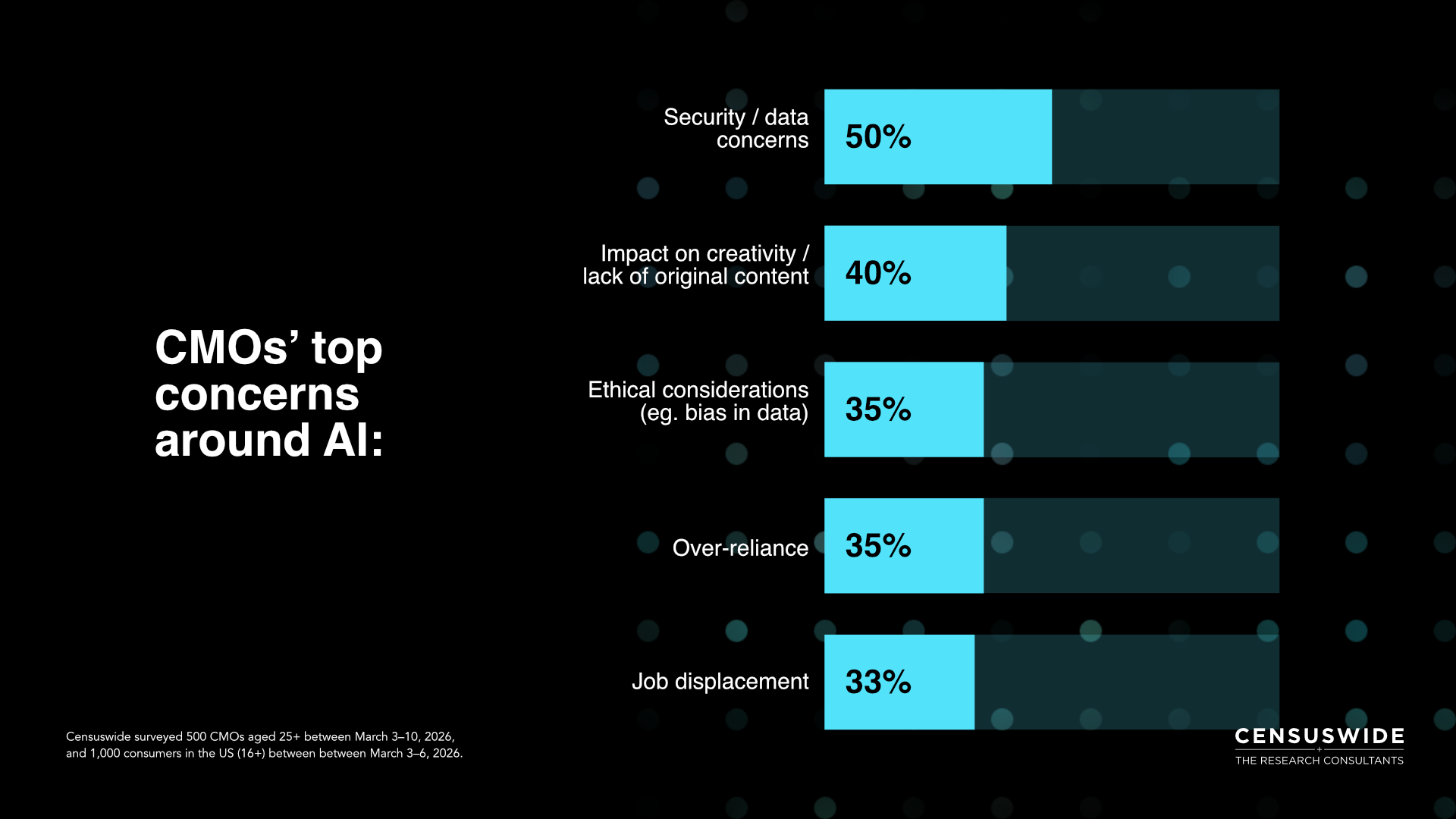
About a third of CMOs are still worried about AI-driven job displacement, a little down from last year. Neither panelist sees it as a simple replacement story.
Rodriguez calls it a redesign. She doesn’t want her creative talent or campaign managers spending days on analysis and reports if AI can do it faster, freeing that time for other work, with human fact-checking still in place. Devane adds a caution: the freed-up time only pays off if people use it to collaborate. She has seen teams where everyone works alone with their own AI agent, and the strategic and creative work gets duller as a result.
She’s also frank that the picture is mixed. At a previous company, an AI agent took over publishing blogs, saving a lot of manual work. When she left, her role wasn’t backfilled. It’s “a little bit of both,” she says, and it depends on how AI-native a company is and what growth it wants.
The clearest upside is skills. Rodriguez has taken prompting classes and now builds landing pages and HTML that used to be outside her skill set. “It’s not Michelangelo,” she jokes, “but it will absolutely get me where I need to quickly.” Devane points out that learning to manage an agent can even be a bridge to managing people.
Where buyers actually make up their minds
The report also looks at how people find and trust brands, and both panelists say the answer depends on who you’re selling to.
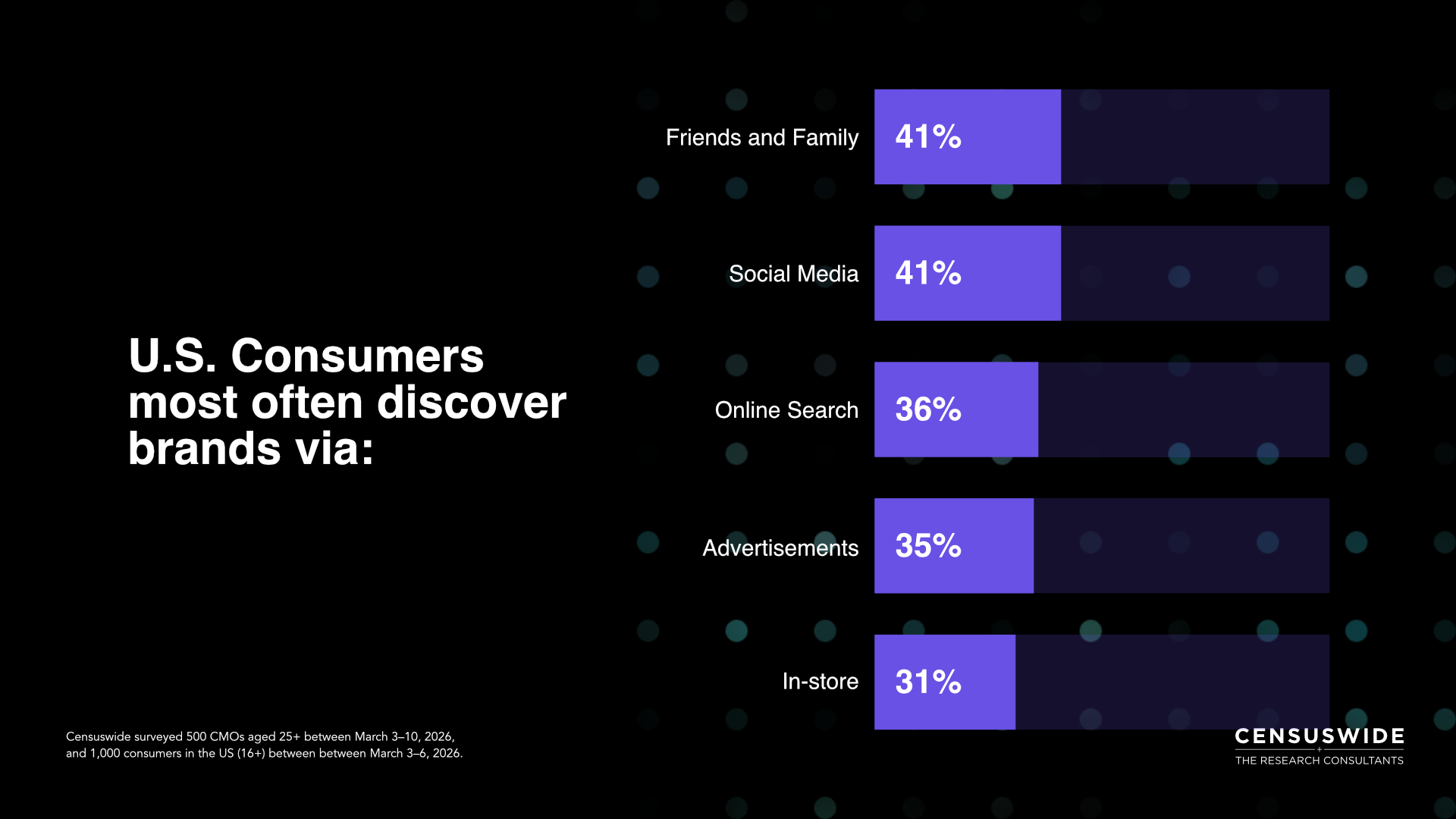
In consumer markets, social and word of mouth both matter. In B2B, especially in security, trust travels through people. Rodriguez says CISOs want to hear from other CISOs, and buyers often carry trusted vendors with them from job to job. One of her most successful campaigns follows those job changers across companies. Developers are a tougher crowd, historically wary of anything that smells like marketing, so reaching them means showing up and taking part on platforms like Discord and Reddit.
Devane has seen both worlds. In security and governance, social was great for awareness, but word of mouth is what moved a buyer to ask for a demo. At a CPG company, social was a main driver of awareness and credibility. B2B cycles are long, so word of mouth stays with buyers in a way a single post or influencer can’t.
Even the format of engagement is shifting. Phone calls and in-person meetings still matter for winning over a whole buying committee, but Devane notes that self-service demos and walkthroughs are letting buyers try the product first, especially on committees with more Millennials and Gen Z. The call hasn’t gone away, but it comes later.
So where should a limited budget go? Both panelists resist picking a channel first. Rodriguez says to follow the buyer. About 80% of her buying journey happens in the “dark funnel,” where prospects research on their own and only reach out to sales once they’ve narrowed their list to four or five vendors. Devane adds that different personas research in different places: developers in Discord, CTOs elsewhere. If she had to choose one thing for B2B or a regulated industry, she says, she’d put her money into word of mouth.
To speak up or stay quiet
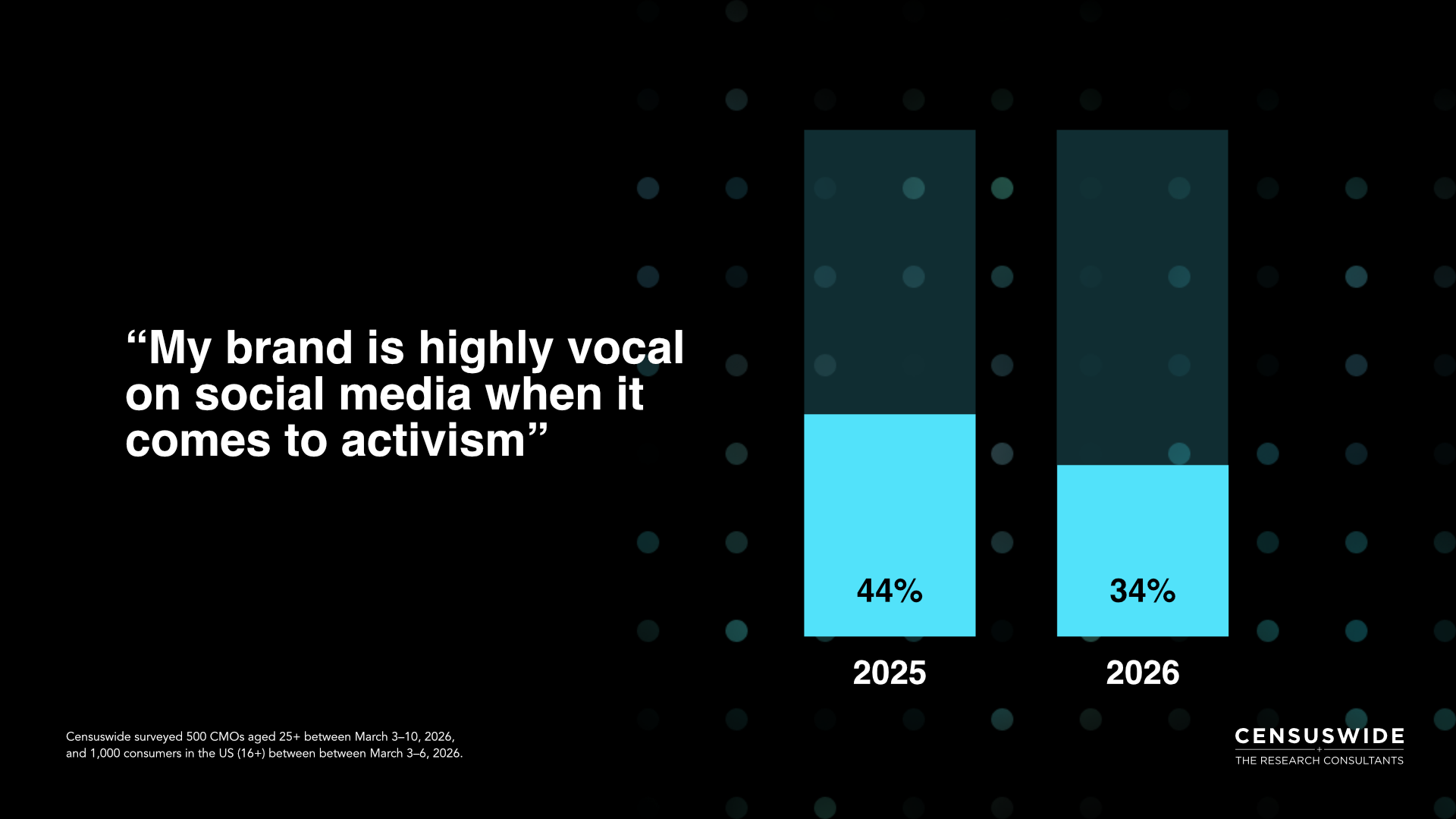
The report finds CMOs pulling back from public activism, while nearly half of consumers, especially younger ones, still want brands to take a stand.
Is that smart risk management or misreading the room? Devane thinks it may be both, depending on who you ask. A polarized political climate makes brands nervous about alienating people. But younger consumers who are tired of sameness, like the AI kind, are looking for brands whose values they can identify with. Rodriguez acknowledges the danger: a stance that feels inauthentic can get a brand “canceled” quickly.
Her team’s answer is a heavy vetting process. In regulated industries that can mean multiple rounds with legal, the executive committee, sometimes the board, and even a customer advisory board. Devane’s rule is simple: “if they’re not going to walk the walk, they shouldn’t talk the talk.” She’s seen brands do this well through quieter action, like employee volunteer days or donations tied to causes that fit the company, which engage people without shouting from the rooftops.
An audience member asked what to do when the CEO wants to weigh in and the audience is split. Rodriguez’s advice: bring data, lay out the pros and cons, and present it as a team decision, while accepting that you may sometimes lose the argument and have to live with it. Devane suggests gaming out each scenario, asking whether you can live with either outcome, and then committing. An audience that’s split is quick to notice a team that is too.
Win first, trust follows
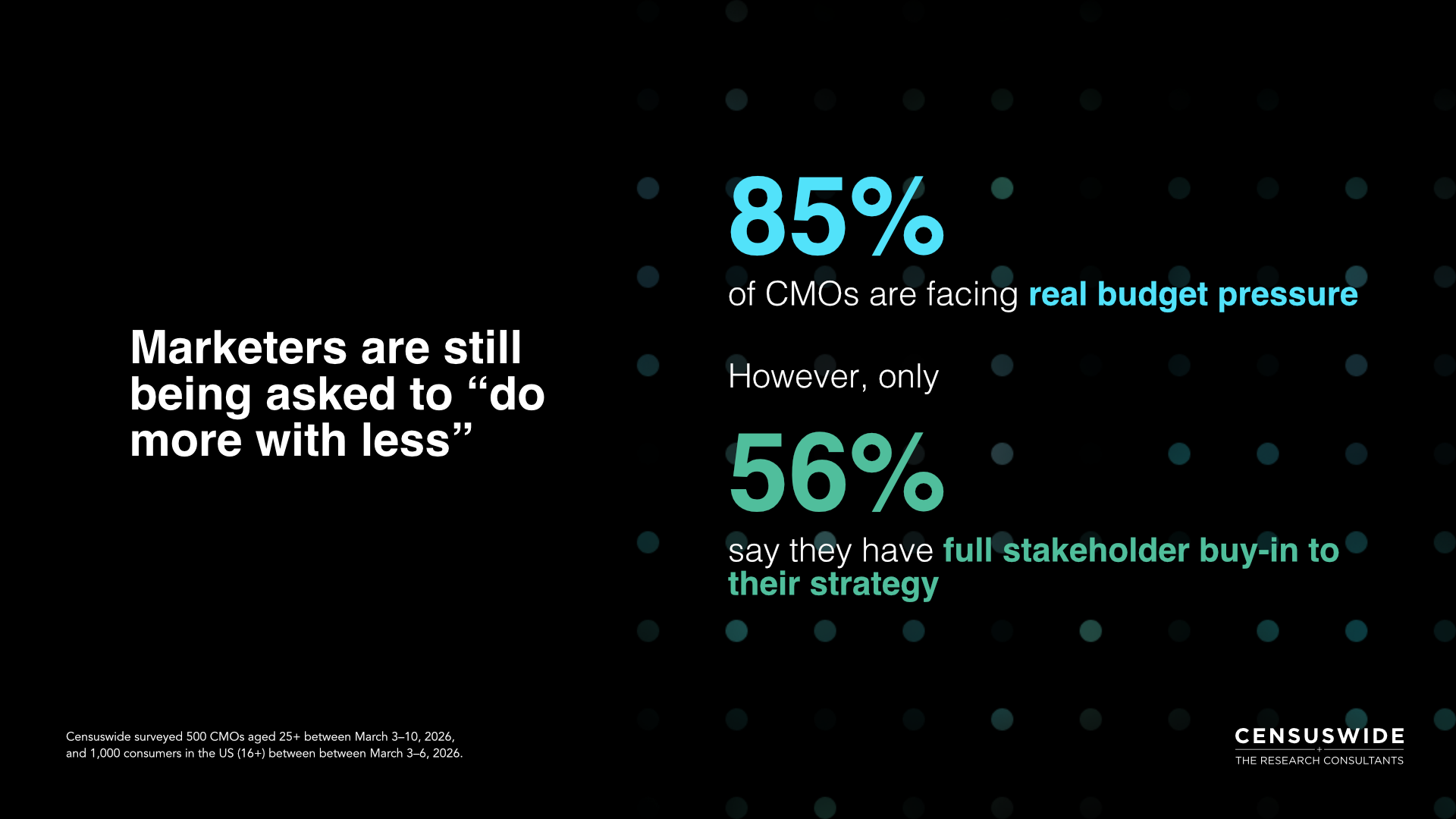
The last finding hits closest to home. Some 85% of CMOs feel real budget pressure, but only 56% say they have full stakeholder buy-in. So which comes first, trust or the win?
“You need the win to earn the trust,” says Rodriguez, who was actually surprised that the pressure figure wasn’t higher. Marketers don’t have the luxury of waiting for trust. It’s easy for a CFO or board to ask why you need budget when AI can do it. Devane has seen marketing budgets reallocated to AI as if nothing was lost, when events and paid media still cost real money. Events are the classic example: if they don’t produce leads and data, the CFO will say no more. With a run of proven wins, the conversation changes.
That brought a good audience question: a mid-sized B2B team running on Google Analytics and instinct, asking what the minimum viable research investment looks like. The panelists agree that research is worth fighting for. In B2B, Rodriguez says, buyers need independent validation before they’ll trust a claim of category leadership, so unbiased research and analyst reports are essential. Devane makes the case for original, proprietary research that no one else has. It proves your position in the market, and it also helps brands show up in AI search. It can be reused across blogs, presentations and your website.
Rodriguez adds a practical tip: watch the traffic coming from AI search, because it’s often your fastest-converting. Those buyers have already done their research, and this may well be where they start.
The bottom line
The through-line of the report is a gap between how marketers feel about AI and how audiences experience it. The CMOs who close it will probably be the ones who use AI where it helps and keep the human parts, including the taste, the community and the willingness to stand behind their work. And when it’s time to make the case for budget, they’ll bring the wins and the data to back it up.
Want the full findings? Download the Voice of the CMO report.